
Butler Training in London: Professional Standards for Private Households
A professional butler plays an important role in the smooth running of a private household. Combining traditional service skills with modern household organisation, discretion and attention to detail, an experienced butler can provide invaluable support to homeowners and their families.
Training your butler offers several key advantages, ensuring that they are equipped to provide the highest standard of service tailored to your household’s unique needs. A well-trained butler can efficiently manage daily operations, from supervising staff and coordinating events to handling personal tasks with discretion and professionalism.
By investing in their training, you ensure they are skilled in areas like etiquette, formal dining service, and household technology, enabling them to adapt to both traditional and modern requirements. Moreover, a trained butler can anticipate your preferences, enhancing comfort and convenience in your home while upholding the standards of a well-run estate.
Professional development can benefit both newly appointed butlers and experienced members of staff looking to refine their service skills or adapt to a new household.
Wilkin’s private household training programmes include Butler & Valet training for households seeking to develop professional service standards.
Why Professional Butler Training Matters
Every private residence has its own character, routines and expectations. The style of service required in a contemporary London apartment may differ considerably from that of a large country house with formal entertaining and a full household team.
While experience is valuable, structured professional training provides an opportunity to strengthen established skills, introduce consistent working methods and ensure that service reflects the homeowner’s individual preferences.
Butler training is not simply about traditional etiquette. It also involves understanding modern private households, maintaining professional relationships, organising responsibilities and delivering attentive service without unnecessary intrusion.
For homeowners, investing in the development of trusted staff can improve consistency and confidence. For employees, it provides an opportunity to refine their skills and progress professionally.
1. Formal Dining and Table Service
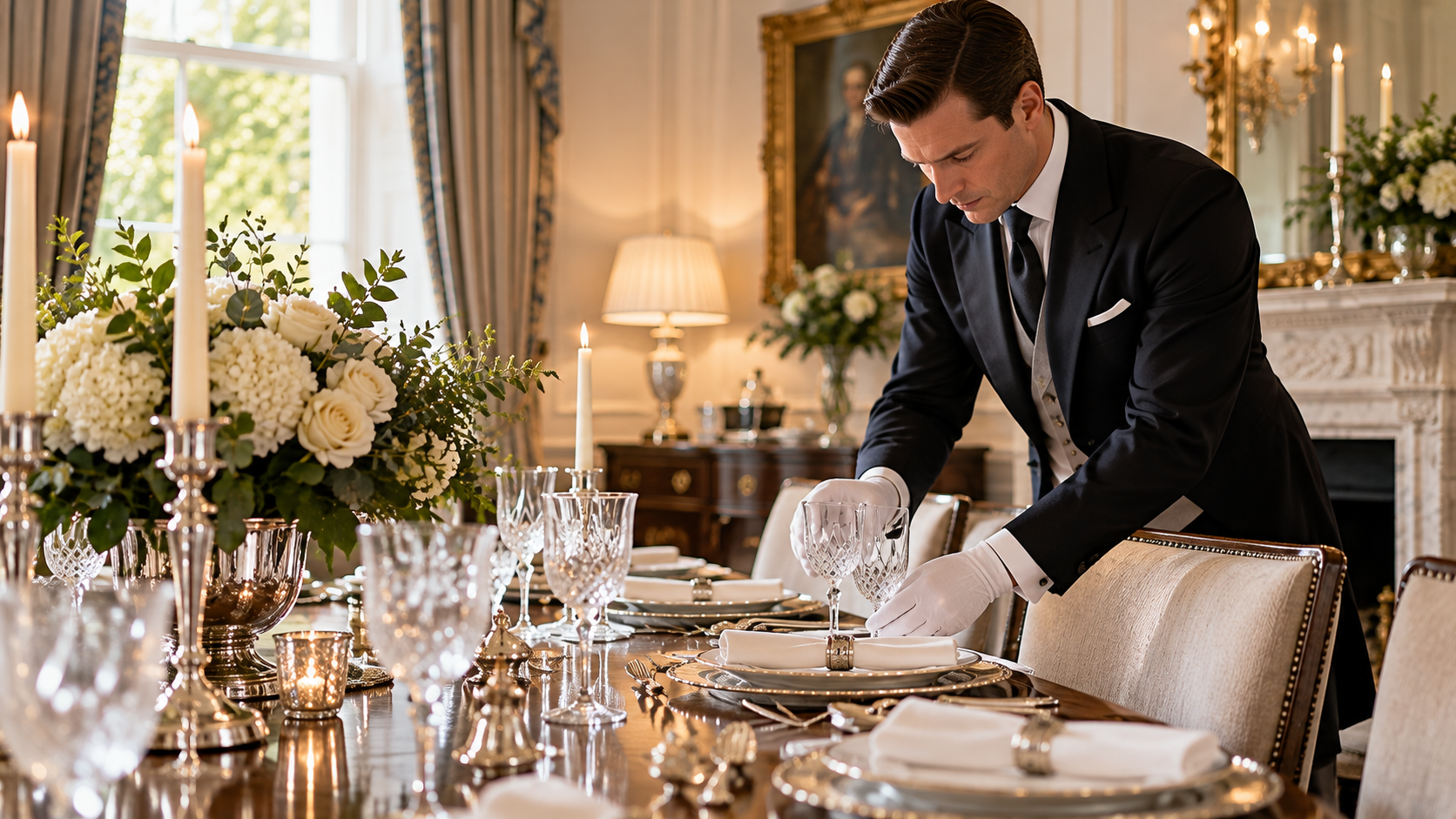
Formal dining remains an important skill within many private households, particularly those that regularly welcome guests or host special occasions.
A professional butler should understand the principles of table presentation, appropriate service styles and the preparation required before guests arrive.
Training may explore areas such as:
- Formal and informal table settings
- Correct placement of tableware, glassware and cutlery
- Preparation of dining rooms and service areas
- Appropriate food and beverage service techniques
- Coordinating service with household staff and caterers
- Clearing, resetting and caring for dining equipment
The purpose is to deliver service that feels polished and attentive while remaining appropriate to the occasion and the owner’s preferences.
For households with valuable tableware, silver or delicate furnishings, particular care should also be taken to follow suitable handling and maintenance procedures.
2. Etiquette, Presentation and Professional Conduct
Professional etiquette is an important aspect of private household service.
A butler may be responsible for welcoming guests, coordinating arrivals, assisting during formal occasions and representing the household when dealing with visitors or suppliers.
Appropriate communication, personal presentation and an understanding of social conventions help create a calm, professional environment.
However, exceptional service is not about applying rigid rules to every situation. It requires the judgement to adapt to the style of the household and the expectations of its owners.
Training can help staff develop confidence in both traditional and contemporary service situations.
3. Discretion, Privacy and Confidentiality
Few qualities are more important in private household employment than discretion.
Butlers may become familiar with personal schedules, family arrangements, private correspondence, guests and other confidential information.
Professional conduct requires careful handling of this information and a clear understanding of appropriate boundaries.
Confidentiality should extend to conversations, personal documents, household routines and the management of access to private areas of the residence.
For high-profile individuals and families, these considerations can be particularly significant.
Good training reinforces the importance of maintaining trust, exercising sound judgement and treating every aspect of private household life with respect.
4. Valet Duties and Personal Service
Within some private households, a butler’s responsibilities may overlap with traditional valet duties.
These can involve preparing clothing, organising wardrobes, caring for personal belongings and assisting with the practical requirements of dressing or travel.
Depending on the role, relevant skills may include:
- Wardrobe organisation and garment presentation
- Understanding clothing care labels and fabric requirements
- Suitable handling of delicate or valuable garments
- Preparing clothing and accessories for appointments or occasions
- Packing and unpacking for travel
- Coordinating specialist garment cleaning where necessary
Valet responsibilities require particular attention to detail, together with respect for the owner’s belongings and personal preferences.
Wilkin’s Butler & Valet training programme is the relevant starting point for households interested in developing these areas of private service.
5. Household Organisation and Staff Coordination
In larger private residences, the butler may also have responsibilities involving other members of the household team.
Depending on the position, this could include coordinating service arrangements, communicating daily priorities, assisting with guest preparations or working alongside a household manager.
Clear communication is essential to ensure that staff understand their individual responsibilities and that important arrangements are completed efficiently.
For example, an evening dinner may require coordination between housekeeping, kitchen staff, catering suppliers and the individual responsible for welcoming guests.
An experienced butler can help bring these elements together while maintaining an organised and discreet style of service.
Where the role involves wider responsibility for the residence, professional household management support may also be relevant.
6. Private Entertaining and Guest Preparation
Entertaining at home can involve considerable planning, particularly when welcoming larger groups or arranging formal occasions.
Depending on the household’s structure, a butler may assist with preparing reception rooms, arranging service, coordinating suppliers and ensuring that the property is ready to receive guests.
Attention to timing, presentation and communication is especially important when several members of staff are involved.
The aim is to create a welcoming, well-organised occasion while allowing the homeowner to concentrate on their guests.
Professional training can help strengthen the practical skills and judgement required to deliver this level of service consistently.
7. Combining Traditional Skills with Modern Household Requirements
The responsibilities of a modern butler can extend beyond traditional dining service and formal etiquette.
Many contemporary private residences use integrated lighting, security, entertainment and other household technologies.
A butler may need a working familiarity with the systems relevant to their role, while knowing when technical assistance should be requested from a qualified specialist.
They may also coordinate with external suppliers, manage agreed household information or help organise arrangements between several residences.
Successful professional service requires the flexibility to adapt traditional standards to modern working practices without compromising discretion or attention to detail.
8. Developing Confidence and Consistent Service
Professional development can help an employee approach their role with greater clarity and confidence.
For a newly appointed butler, training may assist with understanding the standards expected within a private residence.
For an experienced member of staff, it can provide an opportunity to refine established techniques, strengthen particular skills or prepare for additional responsibilities.
Consistency is especially important in households where several members of staff contribute to guest service and daily operations.
Clear standards and appropriate training can help create a more coordinated working environment and support positive professional relationships.
Butler Training and Household Management: Understanding the Difference
Although butlers and household managers may undertake some similar responsibilities, the roles are not necessarily interchangeable.
A butler traditionally focuses on professional service, hospitality, personal assistance and aspects of household organisation. Depending on the residence, the role may also include valet duties and supervision of other service staff.
A household manager generally has wider responsibility for coordinating the operation of the home, potentially including staffing, suppliers, maintenance, budgets and household systems.
In some residences, one individual may undertake both roles. In larger households, the responsibilities are more likely to be separated.
Understanding the distinction helps homeowners establish clear job descriptions, identify suitable training and structure the household team appropriately.
Wilkin’s household consultancy and staffing support services may also be relevant when reviewing these arrangements.
When Should You Consider Butler & Valet Training?
There are several circumstances in which professional training may be valuable:
- When appointing a new butler or valet
- When an existing employee takes on additional service responsibilities
- When establishing formal dining and entertaining standards
- When introducing more consistent household service procedures
- When moving into a larger residence or employing additional staff
- When reviewing the professional development of an established household team
- When refining personal service, wardrobe and valet skills
The most appropriate training should reflect the employee’s existing experience, the responsibilities of the position and the expectations of the homeowner.
Establishing these objectives in advance can help ensure that the training enquiry accurately reflects the household’s requirements.
Butler & Valet Training for Private London Homes
London’s private residences range from elegant period townhouses to contemporary apartments and substantial family homes, each requiring an individual approach to household service.
For owners who maintain a London property alongside a country residence in the Home Counties, consistent service standards across both households may be particularly important.
Wilkin’s household training offering includes three programmes:
- Butler & Valet: For households interested in professional private service and valet skills.
- Housekeeping: For developing consistent cleaning, presentation and household care standards.
- Housekeeping & Laundry: For households where garment care and linen management are also important responsibilities.
Further information about the available options can be found on the Wilkin Household Training page.
Enquire About Butler Training in London
Investing in the professional development of household staff can contribute to higher service standards, greater confidence and the smooth running of a private residence.
At Wilkin Property Management, we understand the importance of attentive, discreet service and the value of establishing clear professional standards within private households.
If you would like to explore the Butler & Valet programme for an existing employee or discuss training requirements for your household team, please visit our Household Training page.
You can also submit a request through the Training Enquiry Form, providing details of the programme, number of staff, preferred dates and any particular requirements.
This allows the proposed training arrangements to be reviewed before details are agreed.